The world has become an unpredictable, volatile place – and not just because of financial and political upheaval. Cyber crime, climate change, public health threats, environmental catastrophes – they can all impact on global stability and business continuity.
One of my most popular news briefings is Radar, a weekly round-up of global risks, threats and potential flashpoints. Here are some excerpts from a recent report. If you’re interested in subscribing to this product, please use the contact form to get in touch.
Trump discusses North Korean nuclear threat with Kazakh president
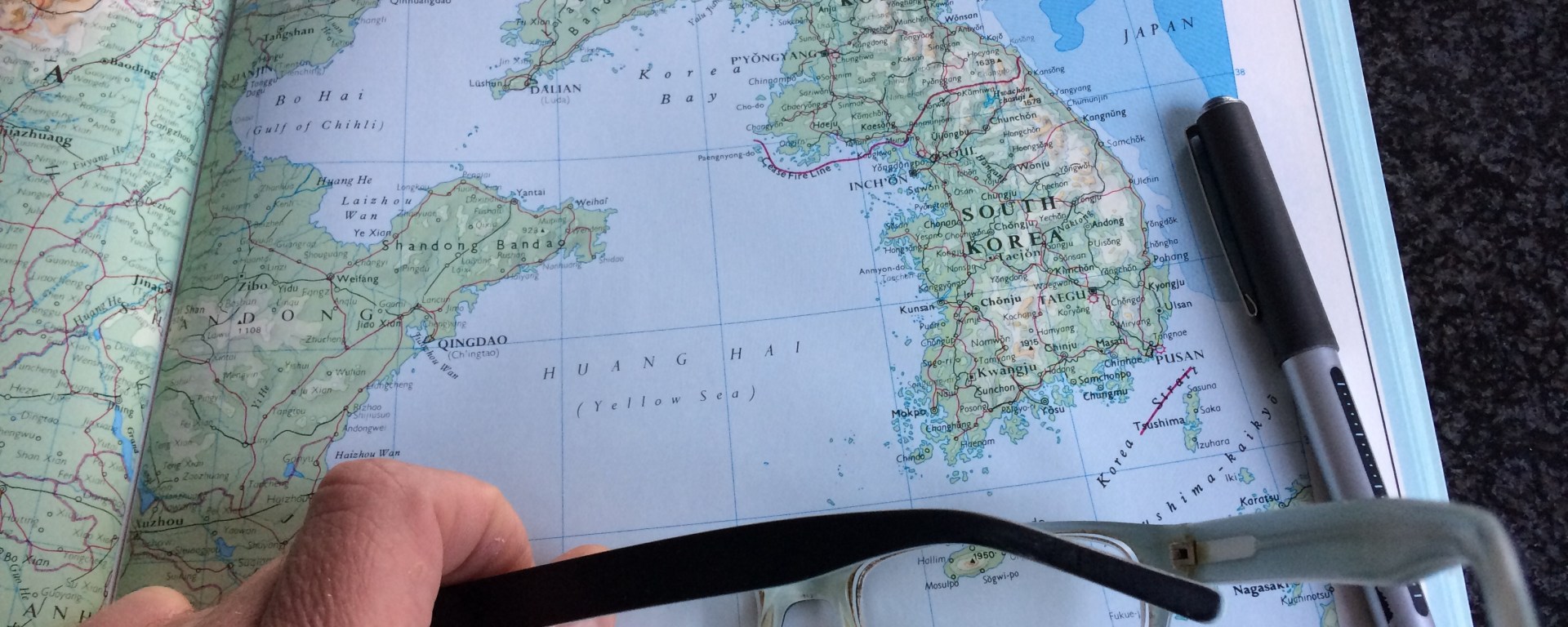
Donald Trump held meetings at the White House on Tuesday with Kazakhstan’s president Nursultan Nazarbayev, during which North Korea was high on the agenda. The US president said he and his Kazakh counterpart were united in their shared determination to prevent North Korea from “threatening the world with nuclear devastation”. Nazarbayev recalled that his country once had one of the world’s biggest nuclear weapons arsenals, but had voluntarily given it up after the collapse of the Soviet Union. The Kazakh leader suggested that he’d like to serve as an intermediary with North Korea, which has no formal diplomatic relations with the US.
The Washington Post ran an analysis piece on Wednesday, headlined: A Nuclear North Korea is Bringing Back Cold War Paranoia. The paper said the emergency missile alert that terrified Hawaii’s residents last weekend reinforced the reality of the present day: “Given the state of tensions with North Korea and the rogue regime’s demonstrated weapons capabilities, the prospect of ballistic missiles raining down on Hawaii can’t be shrugged away.” Ishaan Tharoor, author of the article, reckons that no tangible progress can be achieved in the North Korean crisis without buy-in from Russia and China.
Chinese carrier group sails through the Taiwan Strait
On Wednesday, Taiwan’s Defence Ministry reported that a Chinese carrier group has sailed through the Taiwan Strait that separates the island from the mainland of China. According to Taiwan, a group of Chinese vessels led by the Liaoning aircraft carrier entered the southwestern segment of the strait early on Tuesday morning, though it remained on the Chinese side of the waterway and no unusual activity was detected. By Wednesday lunchtime the carrier group had left Taiwan’s Air Defence Identification Zone, heading north. China has stepped up military drills around Taiwan in recent months, in a move that’s alarmed Taipei. Beijing suspects that Taiwan’s president Tsai Ing-wen wants to push for formal independence – something China has said it would not tolerate.
Utilities seek to bolster defences against cyber threat to electricity grid
Forbes.com ran a piece on Tuesday looking at the increasing susceptibility of the US electricity grid to cyber attacks – and at what regulators and utilities are doing to combat the threat. Writer Constance Douris explained that cybersecurity standards are lacking in the distribution system, where electricity is delivered to customers and operated by utilities. Some providers are now proactively pursuing cybersecurity efforts – Baltimore Gas and Electric, for example, carries out regular drills; Duke Energy employs security professionals devoted to cybersecurity 24/7; and many US states require utilities to maintain emergency response and business continuity plans. It’s an issue that has taken on massive importance because of the grid’s increasing dependence on the internet for operations.
Public health: Why is this flu season so bad?
National Geographic reported on Wednesday that 2017/18 has turned out to be a bad year for the flu. A recent analysis by the Centers for Disease Control and Prevention shows that the virus is now widespread across the continental US. In Britain too, flu cases have rocketed, following a similar pattern observed during Australia’s flu season. According to Anthony Fauci, director of the National Institute of Allergy and Infectious Disease, H3N2 – the strain prevalent this year – is “historically the bad actor among influenzas” and also “associated with complications”. Moreover, scientists think that this year’s flu vaccine may only be about 30% effective against H3N2. In Australia, it was only 10% effective. Experts are therefore reserving judgment on the likely final extent of this year’s outbreak.
 Lawrence Kuglin