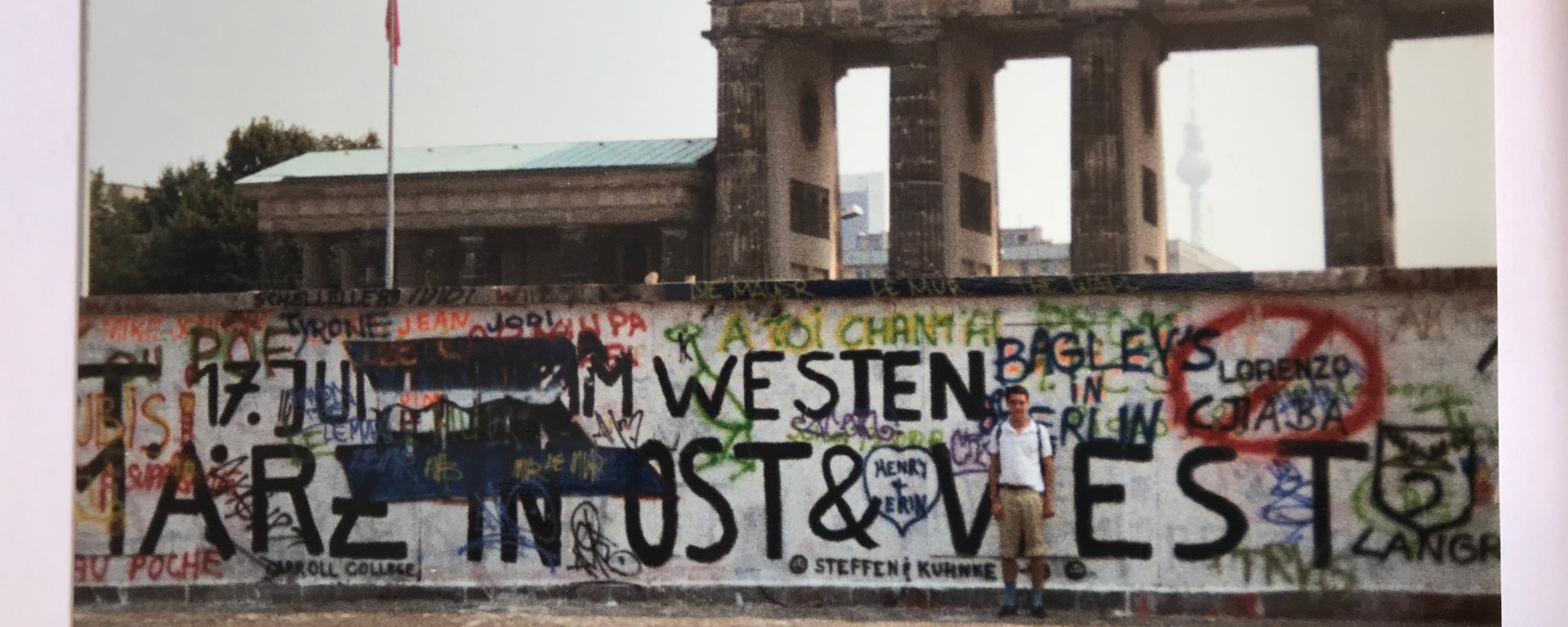
There’s still something bracingly unique about the German capital.
I first visited Berlin back in 1986 when I was sixteen years old. I was staying at my grandmother’s in Hannover for the Easter holidays. One day I said I was bored. “Well here’s a hundred marks,” she said. “Go and take the train to Berlin and have a look around. It’ll be an adventure.” She was right – it certainly was.
The next morning I got up early, took the tram to the station and boarded the 07:45 train to Berlin. In those Cold War days the 170-mile journey took the best part of four hours – three of which were spent trundling slowly across the territory of the German Democratic Republic. Stern border guards entered each compartment to issue GDR transit visas, and there was a sense of tension as we looked silently out of the windows at this strange, forbidding land.
On the outskirts of Berlin the train rolled through a gap in the wall that the East Germans had built decades earlier to stop their citizens from fleeing. And then, after passing a phalanx of grey watchtowers and some fearsome barbed wire fences, we reached the enclave of West Berlin and everyone breathed a sigh of relief and started talking again.
Berlin in the years before the wall came down was a bizarre and intriguing place – from the searchlights at Checkpoint Charlie to the goose-stepping soldiers on Unter den Linden. Can you imagine what it would be like if there were a three-metre-high wall around the western half of London, bisecting the city at Piccadilly Circus? If there were just half a dozen border crossing points between the two halves of the city? If people who lived in Ealing had to get a visa to visit their friends in Hackney?
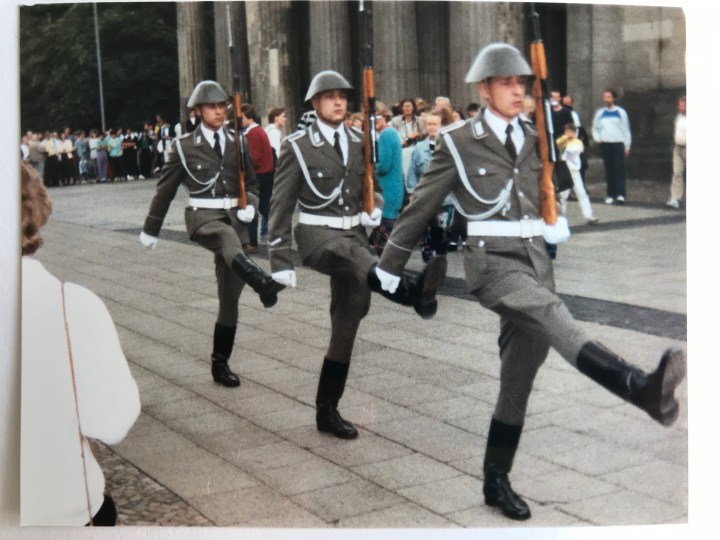
For three decades this was the reality for the residents of Germany’s biggest city. In West Berlin there was a sense of frivolous hedonism among the glitzy shops, bars and bright advertising billboards; in East Berlin the grey boulevards were dour and empty of traffic. The two parts of the city barely communicated with each other. They represented the two opposing social, economic and political camps of the postwar era. For decades, leaders on both sides hurled vitriolic abuse at each other and almost plunged the world into nuclear catastrophe.
Now, of course, we live in a different world, and Berlin has wholly reinvented itself. Berlin is self-confident, multicultural and sexy. But if you visit the city you’ll be confronted around almost every corner by poignant reminders of its turbulent past – and by harrowing evidence of the inhumanity that its people both endured and perpetrated.
On a recent visit to Berlin I spent a week revisiting old haunts and discovering some new ones. Again I was struck by just how many layers of history you can peel back as you wander through the city’s leafy streets. I stayed at an apartment in Motzstrasse, in the heart of the Nollendorf quarter that Christopher Isherwood wrote so memorably about in the early 1930s. The flat was directly above the Magnus Apotheke – a pharmacy named after Magnus Hirschfeld, the pioneering sexologist and advocate for gay rights whose Institut fuer Sexualwissenschaft was raided by the Nazis and closed down in 1933.
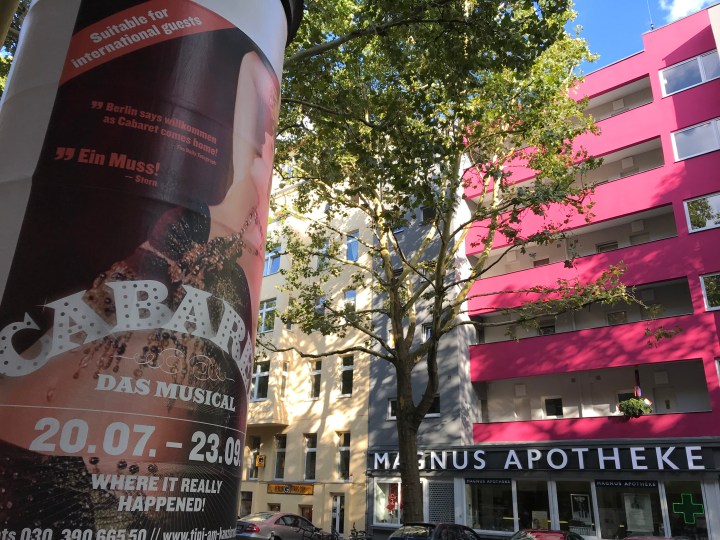
The Nollendorf quarter is a pleasant place to stay, full of bars, cafes and reasonably priced restaurants, and of course it’s one of the great destinations for LGBT nightlife in Berlin.
By day I did a lot of walking. The city is flat, the pavements are wide, and there are vast swathes of urban greenery for relaxing strolls and picnics. But inevitably at some point you will come face to face with brutal reminders of the past. The Berlin Wall is one of them:
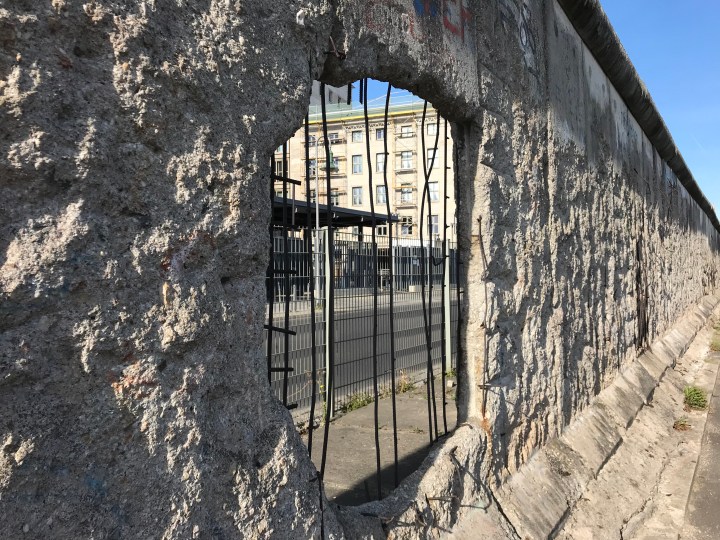
Most of the wall was dismantled soon after the collapse of Communism in autumn 1989, but a few stretches have been left as memorials. One runs along Niederkirchnerstrasse, just a block away from the sparkling new shops and offices of Potsdamer Platz. What makes this street doubly significant is the fact that during the Third Reich it was the site of the notorious Gestapo and SS headquarters. In those days it was called Prinz-Albrecht-Strasse, whose name soon became synonymous with the brutality of the Nazi regime. An informative – and often harrowing – exhibition called the Topography of Terror shows how Hitler’s machinery of repression developed during his 12 years in power.
Half a mile southeast of Potsdamer Platz you then come across this striking ruin, jutting high into the sky like a broken tooth:
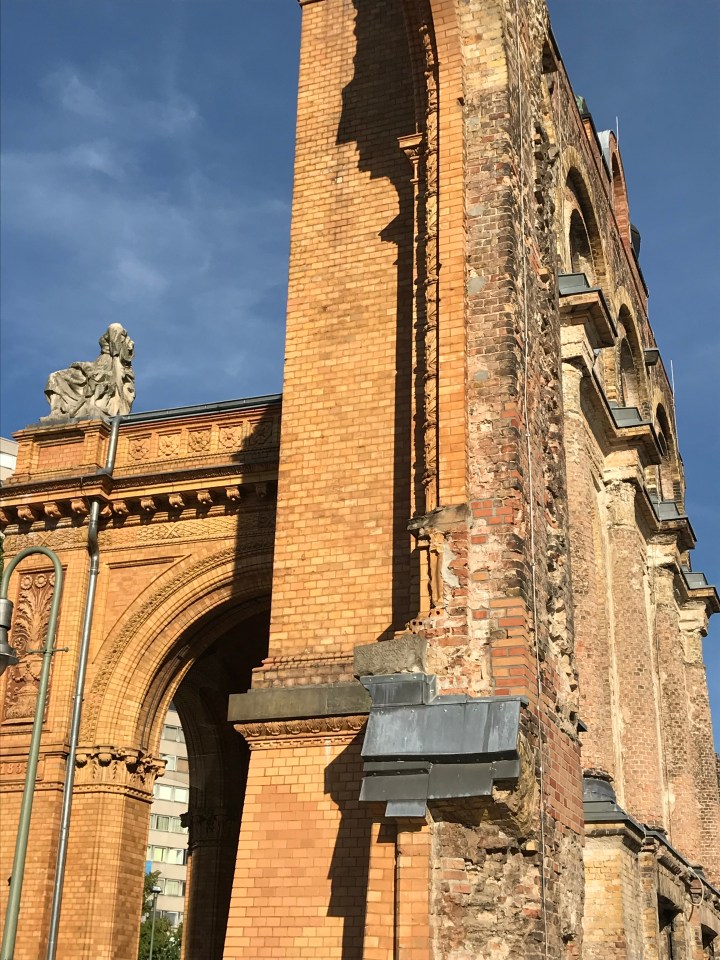
It’s all that’s left of the Anhalter Bahnhof, once one of Berlin’s most important railway stations. In the 1930s, foreign leaders arrived here to be harangued and bullied in Hitler’s Chancellery. But the station was severely damaged during the bombing raids of World War Two and it closed in 1952. Almost all of the building was demolished in 1960, though the central part of the facade was allowed to remain standing, and that’s what you can still see here today. Where the tracks used to run there are now parks and sports grounds.
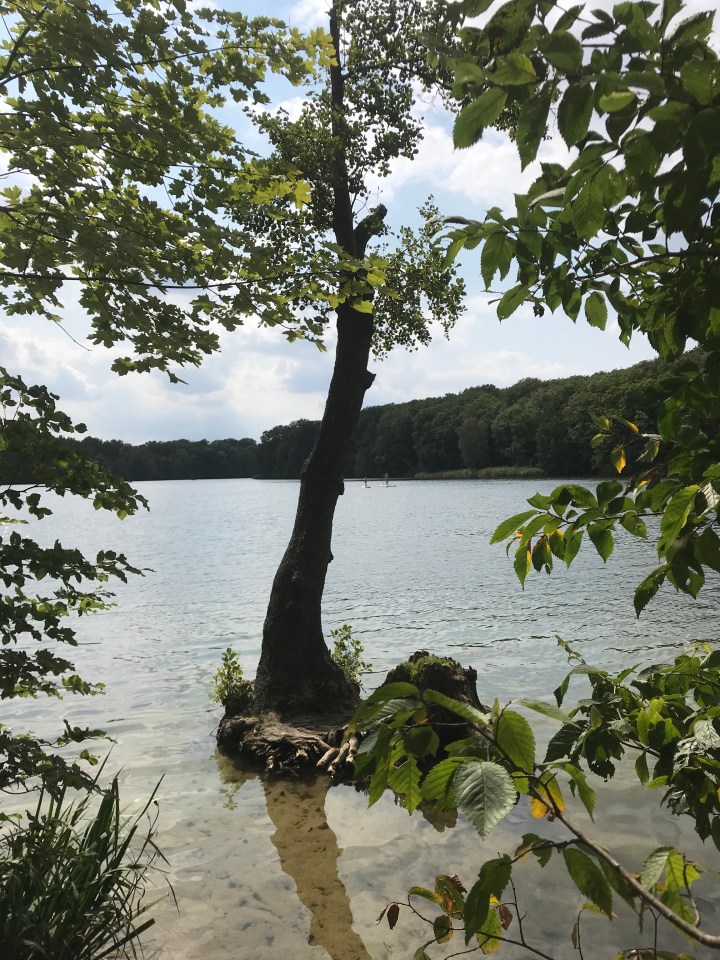
On my last day in Berlin I walked all the way down Kurfuerstendamm, one of the city’s main shopping streets, and right out into the western suburbs. Here there are some wonderful lakes where you can stop for a spot of lunch and a beer, or take a dip in the beautifully calm, clean water. The Wannsee is probably the best known of these lakes, but my own personal favourite is the Schlachtensee. Even though I didn’t have a towel or swimming trunks with me, I just had to plunge in for a bathe. Germans are very liberal about nudity…
But amid the natural beauty out here in the leafy western suburbs of Berlin, I stumbled across a place I had never been to before – and one that is intrinsically linked with horror, barbarity and evil. At Grunewald station there’s a deeply powerful memorial to the thousands of Jews who were deported from here to ghettos and extermination camps during the Third Reich. The victims were usually marched to the station through the empty streets of the city in the early hours of the morning, and then herded onto the trains that took them to their deaths. All along the platform, metal plates now list each and every deportation train, its date and destination – often Auschwitz or Theresienstadt.
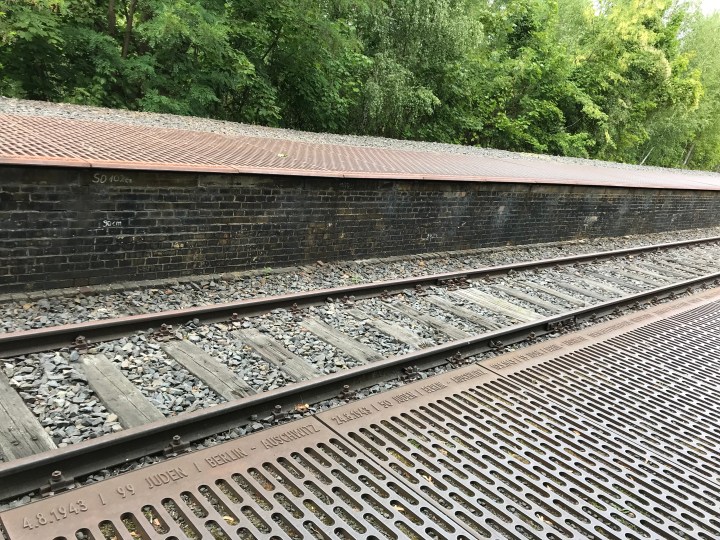
There were just one or two other visitors as I stood here contemplating the horror of it all. Only a hundred metres away in the main part of Grunewald station, 21st-century commuters, shoppers and tourists were waiting for trains, stopping for coffees, chatting to friends. But in a world that often seems to be sliding back into intolerance, anger and violence, it’s more important than ever to come to places like this – and to remember what happened just a few generations ago when hatred ran riot.
 Lawrence Kuglin
Great post
LikeLike