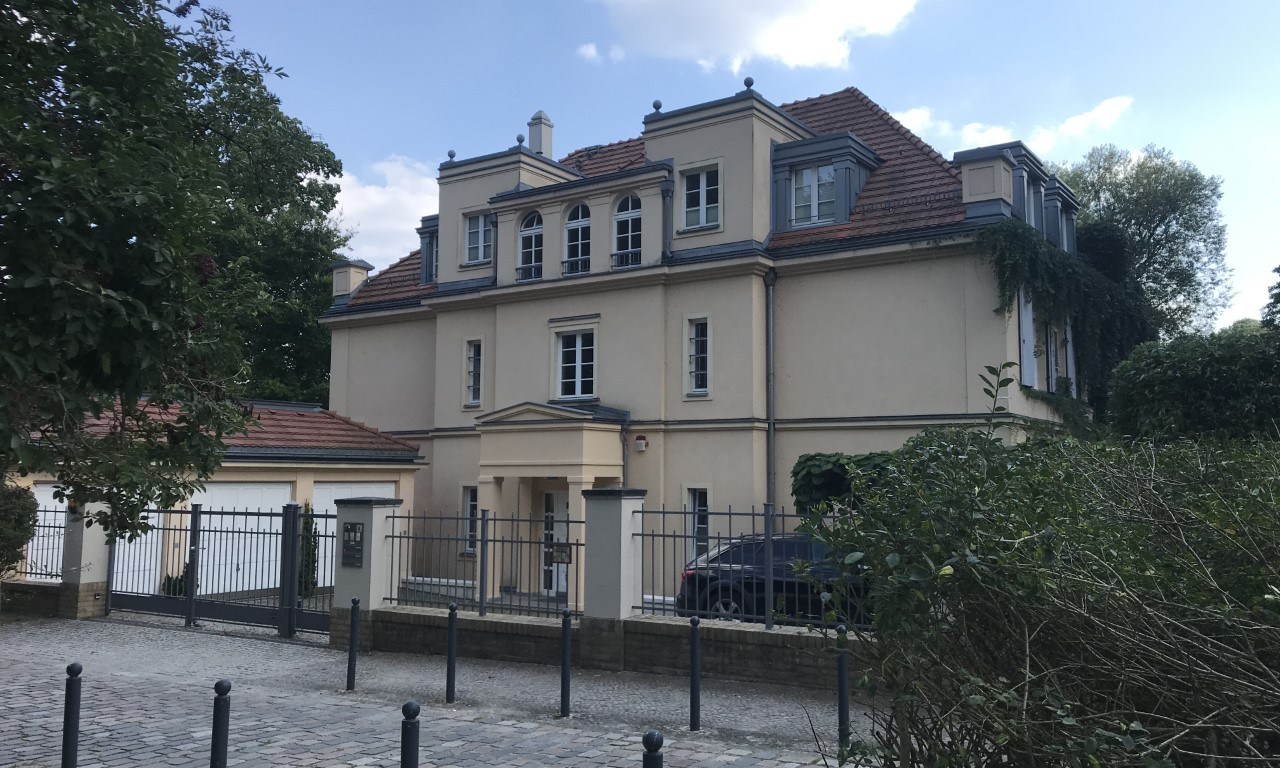
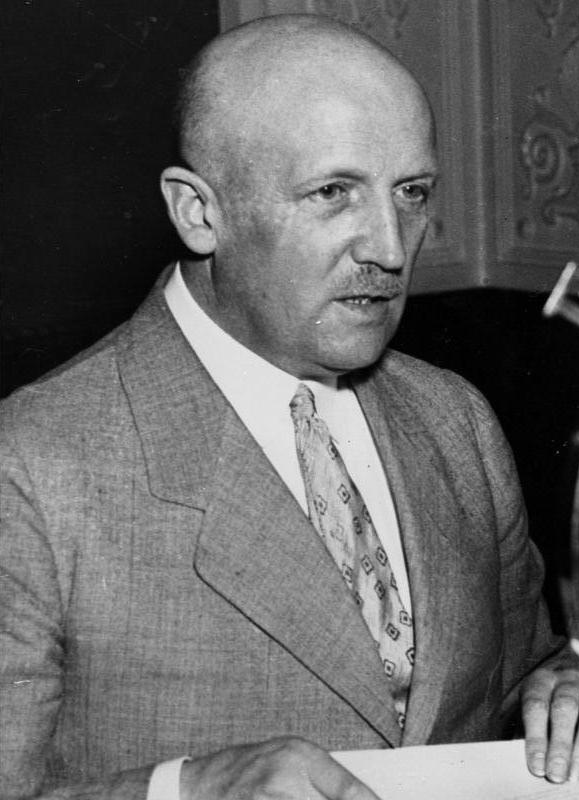
Around midday on June 30th 1934, a car pulled up outside a villa in a quiet leafy street on the outskirts of Berlin. Two men in trenchcoats got out and rang the bell. When the housekeeper opened the door, the men asked to see General Kurt von Schleicher. The maid hesitated but the men were insistent. They stepped inside.
The 52-year-old general was in his study, sitting at his desk and on the phone to a friend. “Yes,” the friend heard him say with a note of irritation. “I am General von Schleicher.”
Those were his last words. A second later two shots rang out, and the man who had preceded Hitler as chancellor was dead. When his young wife Elisabeth rushed to see what had happened, she was gunned down too. She lay in the hallway bleeding heavily.
The scene of the crime
On a trip to Berlin in summer 2020 I visited the scene of General Schleicher’s assassination with a German friend. We had taken bikes out for the day and were cycling to Werder an der Havel, a sleepy little lakeside town in Brandenburg.
To Pascal’s slight exasperation I asked if we could make a quick detour to Griebnitzstrasse, where the events I’ve just described took place over 80 years ago. I’d always wanted to visit the location. I was curious to see what it looked and felt like. Was there a memorial, I wondered. Did people leave flowers there on the anniversary?
Pascal relented. So just before Glienicke bridge we turned off the main road to Potsdam, rattled across a succession of dusty cobbled streets, and stopped outside a villa where a youngish man was parking his car. He looked at us with some suspicion, we said hello, he nodded and went inside.
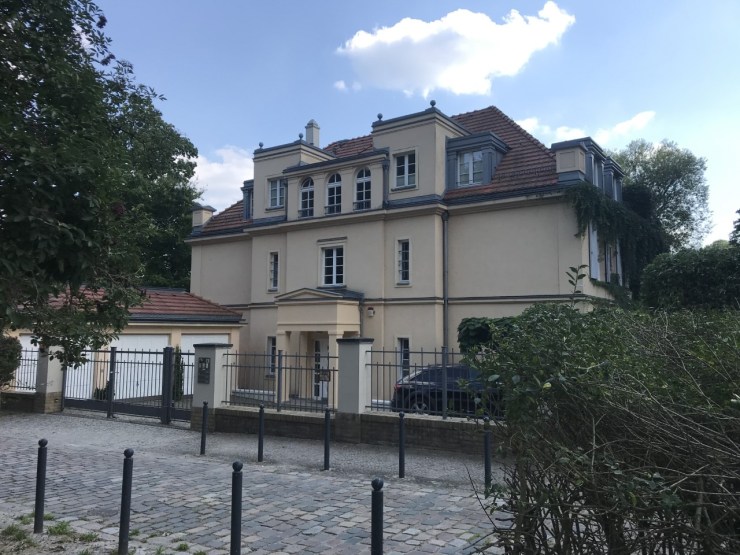
I’d been expecting at least a plaque to mark the villa’s sinister place in German history. But to my disappointment there wasn’t one. In fact, there was nothing at all to indicate that this was the spot where the Hitler regime turned murderously on the last chancellor of the Weimar Republic.
We soon felt rather uncomfortable standing outside the house in this quiet wealthy suburb. So we walked self-consciously along the street for a bit and then turned back. I took a quick photo, we got on our bikes again and set off for Werder.
A complex man
So why did Schleicher matter? And why did Hitler want him dead?
Kurt von Schleicher was a Prussian aristocrat, a military man to his roots, and a very political general. From the First World War until his murder in 1934, he was a key mover and shaker in Germany’s conservative nationalist circles.
But it would be an oversimplification to label him a reactionary. He was a rather more complex man than that – always prepared to do pragmatic deals if it was in the Army’s interests to do so. For example, he developed good relations with the Social Democrats during the First World War, when he wrote a paper criticising war profiteers in industry.
And after the November Revolution of 1918 he was instrumental in negotiating the so-called Ebert-Groener pact, in which the Army agreed to defend the new centre-left government against communist insurgents – in return for military autonomy.
Political intrigue
In the 1920s Schleicher moved steadily up the Reichswehr hierarchy and became the primary liaison between the Army and the government. During the brief “golden years” of the Weimar Republic he accepted the new liberal democracy – on condition that there was minimal government interference in Army affairs.
But when Weimar lurched into crisis following the onset of the Great Depression, its fairweather friends deserted it. And Schleicher was no exception. He now saw his chance to create an authoritarian military state that he hoped would restore Germany’s prestige abroad and crush the left at home.
An inveterate political intriguer, Schleicher undermined first the Grand Coalition of Social Democrat Hermann Mueller, and then the rightwing cabinet of Heinrich Bruening. Soon this eminence grise had become one of the most influential figures in the state, thanks to his dual position as a leading general and a trusted confidante of President Hindenburg.
Schleicher and Papen
In May 1932 Schleicher was instrumental in organising Bruening’s fall and the appointment of conservative aristocrat Franz von Papen as the new Reich Chancellor.
It was a seminal moment in the destruction of Germany’s fragile democracy. Papen now appointed Schleicher as Minister of Defence, and together the two men set about trying to create the New State of which they dreamt – with Schleicher pulling most of the strings.
The ban on the SA and SS was lifted, the centre-left Prussian government was deposed, and two general elections were held in quick succession – with the Nazis now becoming by far the largest party.
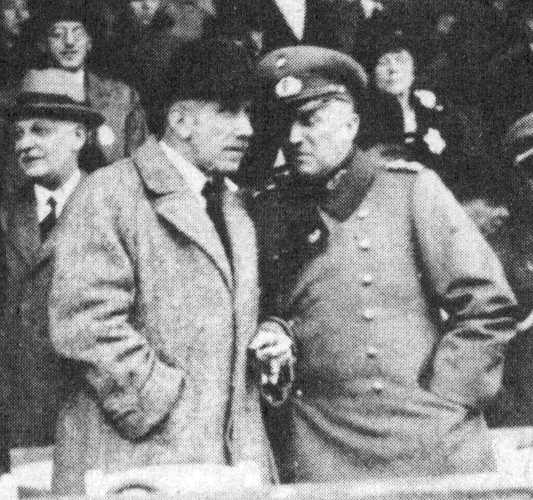
Both Papen and Schleicher wanted to co-opt the Nazis and use their well-organised militias to keep the communists at bay. But Schleicher soon tired of playing second fiddle to his former protege and conspired incessantly against him. In early December 1932, amid growing fears of civil war, he successfully forced Papen’s resignation.
With six million Germans unemployed and over half of voters supporting the parties of the far left and right, it was time for one last throw of the dice. President Hindenburg appointed Schleicher as Reich Chancellor. His moment had come.
Radio address to the nation
Anxious to calm fears of a military dictatorship, Schleicher made his now famous radio address to the nation. In it, he told his listeners:
“Ich möchte deshalb heute auch an alle Volksgenossen die Bitte richten, in mir nicht nur den Soldaten, sondern den überparteilichen Sachwalter der Interessen aller Bevölkerungsschichten für eine hoffentlich nur kurze Notzeit zu sehen, der nicht gekommen ist, das Schwert zu bringen, sondern den Frieden.
“Ich glaube das hier um so mehr sagen zu dürfen, als meine Ansichten über Militär-Diktatur nicht erst von heute sind und allgemein bekannt sein dürften. Ich habe es schon verschiedentlich zum Ausdruck gebracht und wiederhole es heute: Es sitzt sich schlecht auf der Spitze der Bajonette.”
Schleicher said he wanted Germans to see him not just as a soldier, but as “the non-partisan trustee of the interests of all sections of society” for what (he said) would hopefully be just a brief emergency period. He had come not with a sword, but to bring peace.
“My views on military dictatorship are nothing new and should be common knowledge by now,” he told the nation. “I have said it often and I’ll repeat it again today: it’s uncomfortable to sit on the tip of a bayonet…”
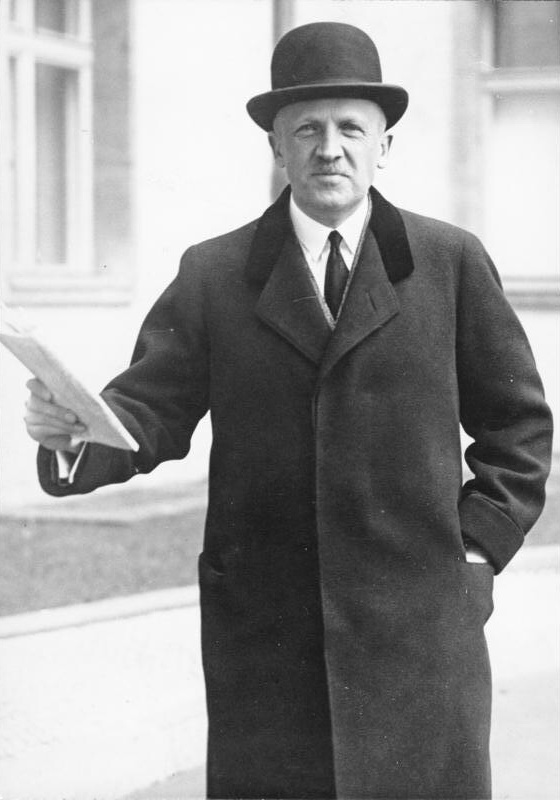
The shortest chancellorship
Profiling himself as the “Social General”, Schleicher now sought to assemble a broad coalition of support for his government – from the trade unions and Social Democrats to more moderate elements of the Nazi party.
Many observers were deeply sceptical. After all, Schleicher was no liberal democrat. But he was the very last throw of the dice for the Weimar Republic. And with the benefit of hindsight, if he had succeeded in his aims – however self-centred and authoritarian they were – the world might have been spared a lot of suffering and millions upon millions of deaths.
Schleicher made contact with Gregor Strasser, one of Hitler’s rivals within the NSDAP, and offered him the post of Prussian Prime Minister. But the negotiations came to nothing as Hitler deftly isolated Strasser in the party.
Schleicher also tried to woo the trade unions. And during his brief 60-day chancellorship – the shortest of the Weimar Republic – he launched a huge public works programme that helped to counter some of the worst effects of the Great Depression. The projects his government started gave work to no fewer than two million Germans by July 1933.
But by then it was Hitler who took all the credit. For at the end of January 1933, Papen took revenge on his old mentor and persuaded President Hindenburg to sack Schleicher and appoint Hitler as chancellor instead – with Papen as his faithful deputy.
Amid wild rumours that Schleicher was planning a last-minute coup, General von Blomberg was quickly sworn in as the new Defence Minister and the change of government took place accompanied by torchlit processions. Schleicher had been outmanoeuvred. The Third Reich was born.
Marginalised and indiscreet
The first six months of Hitler’s coalition government saw the relentless salami-slicing of civil liberties, the emasculation of the Reichstag, and finally the banning of all political parties other than the NSDAP. There then followed a period of consolidation, when Hitler was keen to project an image of stability to the outside world.
Men like Schleicher, who had previously held all the levers of power, were now marginalised. He and his wife moved into the villa at Griebnitzstrasse 4 – right on the edge of Berlin, but close enough to the capital to keep in touch with his friends.
Over the months that followed, Schleicher was dangerously indiscreet and frequently criticised the Hitler regime. In the febrile climate of the time his contacts with French ambassador André François-Poncet made him an object of grave suspicion.
And his close friendship with Ernst Röhm, the SA chief and Hitler’s big rival, only added to the sense in government circles that he was up to something.
Night of the Long Knives
On June 30th 1934, Hitler struck against his opponents – both real and imagined – in the so-called Night of the Long Knives. It was a quick and brutal settling of scores. Röhm and his associates were killed, Schleicher and his wife were gunned down in their home in Griebnitzstrasse, and other leading figures like Heinrich Bruening fled abroad.
A few years before her death in 2014, Schleicher’s step-daughter Lonny shared her recollections of that fateful day. She speaks of it all with a sense of sad resignation.
Lonny’s story goes like this. Arriving home that afternoon, she found the street cordoned off and policemen standing outside her house. She knew all the officers (“everyone knew everyone here”) and one of them told her: “I’m not allowed to let anyone pass. But of course you can.”
Inside the house, her aunt told her what had happened. Her stepfather was lying dead in his study, but her mother was still alive and had been rushed to hospital in an ambulance.
So Lonny took a taxi to the hospital in Potsdam. “The doctor was lovely to me. But he said: I’m afraid I have to tell you that your mother died on the way here.”
Back home, the police questioned Lonny very carefully and asked her who could have done such a thing to her parents. “At that point it wasn’t clear that it was a political murder,” she says. But then the SS arrived on the scene and suddenly no one was allowed downstairs anymore. Everyone had to stay in their rooms.
No death notices could be sent out. The authorities didn’t allow an autopsy. The bodies of Kurt and Elisabeth von Schleicher were taken from the mortuary and cremated. But several days later Lonny’s father managed to persuade the Gestapo to hand over the urns containing their ashes.
“We held a funeral, but without telling anyone except our closest friends,” Lonny recalls. “And no uniforms were allowed to be worn at the ceremony.”
The aftermath
The brutal murder of the last chancellor of the Weimar Republic shocked the world.
On hearing of the assassination, old Kaiser Wilhelm, now living in exile in the Netherlands, declared: “We have ceased to live under the rule of law, and everyone must be prepared for the possibility that the Nazis will push their way in and put them up against the wall.”
In a speech to the Reichstag justifying his actions, Hitler denounced Schleicher for conspiring with Röhm to overthrow the government. He claimed that both men had been traitors working in the pay of France.
But the Army demanded Schleicher’s rehabilitation. And interestingly, after several months of intense lobbying by leading generals, Hitler relented. In a speech on January 3rd 1935 at the Berlin State Opera, he said that Schleicher had been shot “in error”, that his killing had been ordered on the basis of false information, and that Schleicher’s name was to be restored to the honour roll of his regiment.
What happened to the house
So what became of the house where the last chancellor of the Weimar Republic was murdered?
As we stood outside the villa that warm, sunny afternoon in August 2020, Pascal said it looked too modern to be the original building. I thought it might have been heavily renovated. But it turned out Pascal was right.
After doing a little more research, we discovered that the Schleicher villa was pulled down in the 1980s, along with its neighbours at Griebnitzstrasse 5, 5a and 6. Why? Because it stood just behind the Berlin Wall, on the East German side, and the GDR authorities wanted to strengthen the border fortifications. The villa was in the way and had to go.
Just a few years later, after German reunification in 1990, this became prime real estate once again and the speculators moved in. Around the turn of the century, five high-end multi-family houses were built on Griebnitzstrasse – and these are the villas you can see there today, nestling cosily against the dark trees.
The Adenauer connection
There’s one more interesting detail that came to light after our visit. It turns out that none other than Konrad Adenauer was living just round the corner (at Rosa-Luxemburg-Strasse 40) on the day the Schleichers were murdered in their home.
Adenauer, a prominent figure in the banned Centre Party who had turned down the chancellorship back in 1926, was on Hitler’s blacklist too. But he escaped with his life on the Night of the Long Knives…
As Terence Prittie writes in his 1972 biography of the German statesman:
“Adenauer was arrested by a single member of the Gestapo at his house in Neubabelsberg. It was a warm summer evening, and the whole family were in the garden. Adenauer was watering his flowers. The Gestapo agent tried the garden gate, thought that it was locked, and climbed over it. He told Adenauer he was under arrest, let him put a few things into a bag and took him away in his car.
“He was held for two days, along with 29 other ‘suspects’, in a villa outside Potsdam. All the prisons in the town were full. Twice he was briefly interrogated and the second time, in Potsdam police headquarters, he was threatened with a ‘further’ interrogation in the cellar. By this he was meant to understand that he would be tortured, but he refused to admit to any guilt which he did not feel.”
Adenauer was eventually released. He survived the Third Reich by keeping a low profile, and went on to become Germany’s first postwar chancellor, dying in 1967 at the ripe old age of 91.
Franz von Papen, the man who helped Hitler to oust Schleicher, lived on until 1969.
 Lawrence Kuglin
Your writing flows and held my attention to the end. I had long wondered about Schleicher’s fate after death and that of his wife and house. Thank you.
LikeLike